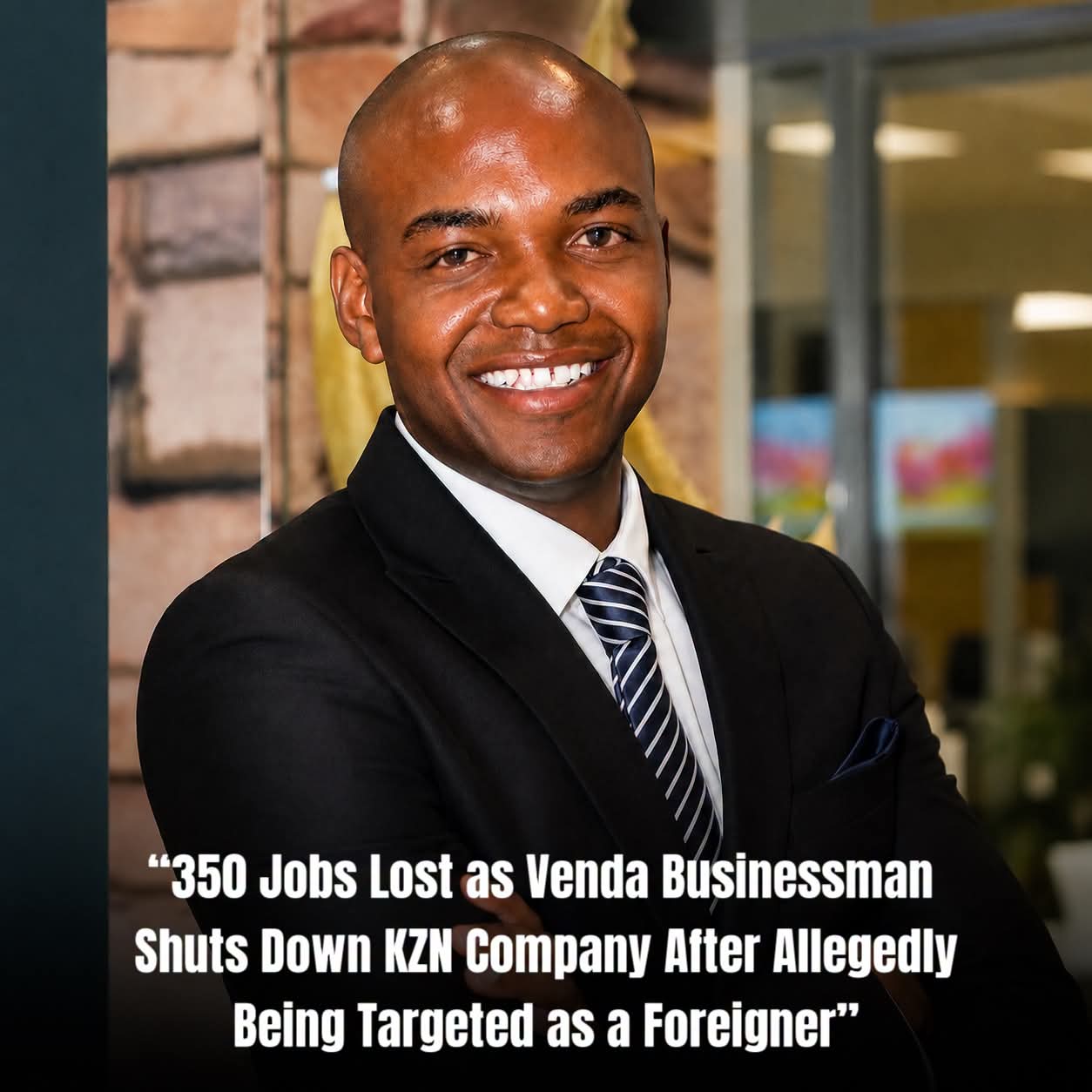
A heartbreaking story has emerged involving a South African businessman from Limpopo whose remarkable journey of building a thriving company in KwaZulu-Natal has reportedly come to a painful end. What was once a successful enterprise that provided employment to hundreds of local residents and empowered thousands of young people through free skills development programmes has now closed its doors following years of alleged intimidation and harassment.
According to reports circulating on social media, the businessman, who is a South African citizen originally from Limpopo, became the target of anti-immigration groups who allegedly mistook him for a foreign national because of his background and business success. Despite repeatedly insisting that he was born in South Africa and providing proof of his citizenship, the harassment reportedly continued.
The closure of the company has not only affected the businessman and his family but has also devastated hundreds of workers who depended on the business for their livelihoods. At its peak, the company is said to have employed around 350 people from surrounding communities, making it one of the area’s significant sources of employment.
## A Business That Created Opportunities
For many years, the company was recognised for creating jobs at a time when unemployment remains one of South Africa’s biggest challenges. Hundreds of local residents found stable employment through the business, allowing many families to earn a steady income and improve their standard of living.
Beyond providing jobs, the businessman reportedly invested heavily in developing young people by offering free skills training programmes. Thousands of unemployed youth are said to have benefited from these initiatives, learning practical skills aimed at improving their chances of finding employment or starting their own businesses.
The programmes reportedly focused on entrepreneurship, technical training and workplace readiness, giving many young people opportunities they may otherwise never have received.
Community members have described the businessman as someone who believed in giving back, saying he was passionate about empowering others instead of simply growing his own wealth.
## Alleged Mistaken Identity
Reports claim that problems began when members of anti-immigration groups allegedly accused the businessman of being a foreign national operating illegally in South Africa.
Despite being a South African citizen from Limpopo, he was reportedly subjected to repeated questioning, intimidation and pressure from individuals who believed he did not belong in the country.
Supporters argue that assumptions were made based on stereotypes rather than verified facts, resulting in a prolonged campaign that placed enormous strain on both the businessman and his employees.
Those close to the situation say the businessman repeatedly tried to explain his South African citizenship but continued facing hostility.
## Mounting Pressure
As the alleged harassment continued, running the business reportedly became increasingly difficult.
Employees are said to have lived with uncertainty, unsure whether operations would continue from one week to the next. Suppliers, customers and business partners were also reportedly affected by the ongoing instability.
According to accounts shared online, the businessman eventually reached a point where continuing operations was no longer financially or emotionally sustainable.
The difficult decision was made to shut down the company entirely.
For many workers, the announcement reportedly came as a devastating shock.
Some employees had worked at the company for years and relied on their salaries to support extended families, pay school fees and cover everyday living expenses.
## Hundreds Lose Their Livelihoods
The closure reportedly resulted in the loss of approximately 350 jobs.
In a country where unemployment remains extremely high, losing a single large employer can have ripple effects throughout an entire community.
Families that depended on the company now face an uncertain future, while local businesses that benefited from employee spending may also experience reduced income.
Economic experts have often pointed out that when one business closes, the impact extends far beyond the owner. Transport operators, informal traders, nearby shops, landlords and numerous service providers can all feel the effects.
This is why many people have described the reported closure as a tragedy that extends well beyond one individual.
## Social Media Reacts
News of the company’s closure has sparked widespread discussion on social media.
Many South Africans expressed sadness over the reported loss of jobs, arguing that businesses creating employment should be supported regardless of where their owners come from, provided they operate legally.
Others said the incident highlights the dangers of making assumptions about people’s identities based solely on appearance, language or surname.
Some users also pointed out that South Africa’s unemployment crisis requires more investment and job creation, making the closure of a company employing hundreds particularly painful.
At the same time, others argued that concerns about illegal immigration remain a legitimate issue but stressed that any enforcement actions should always be based on verified information and conducted through lawful processes rather than public intimidation.
The online debate has therefore highlighted the complex and emotional nature of discussions surrounding immigration, employment and economic opportunities in South Africa.
## A Reminder About Verification
While the story has generated significant public attention, it is important to note that many details currently circulating online are based on social media reports and public claims. Some aspects of the incident have not yet been independently verified through official statements.
As with many stories that trend online, further information may emerge as additional sources provide confirmation or clarification.
Nevertheless, the reported closure serves as a reminder of the devastating consequences that prolonged disputes and public pressure can have on businesses, workers and entire communities.
## Lessons From the Incident
The reported events have reignited conversations about the importance of verifying facts before making accusations.
Many South Africans believe businesses should be held accountable if they break the law. However, they also argue that individuals should not face harassment based on assumptions or mistaken identity.
The incident also underscores the importance of protecting legitimate businesses that create employment opportunities, particularly during a period when millions of South Africans remain unemployed.
Communities across the country continue to depend on entrepreneurs willing to invest, create jobs and develop young people’s skills.
When businesses close, it is often ordinary workers who suffer the greatest consequences.
## Conclusion
The reported closure of this KwaZulu-Natal business marks the end of what many described as a remarkable success story. A businessman from Limpopo allegedly built a company that not only employed hundreds of people but also invested in the future of thousands of young South Africans through free skills training and entrepreneurship programmes.
Now, following allegations of repeated harassment after being mistaken for a foreign national, that chapter has reportedly come to an end.
For the hundreds of workers who have lost their jobs and the many families affected, the consequences are immediate and deeply personal. Regardless of differing opinions surrounding immigration and economic policy, many South Africans agree that protecting legitimate businesses and ensuring disputes are handled lawfully remains essential for the country’s economic future.
As more information becomes available, many will be hoping that the full circumstances surrounding this heartbreaking case are brought to light, while lessons are learned to help prevent similar situations from unfolding again.